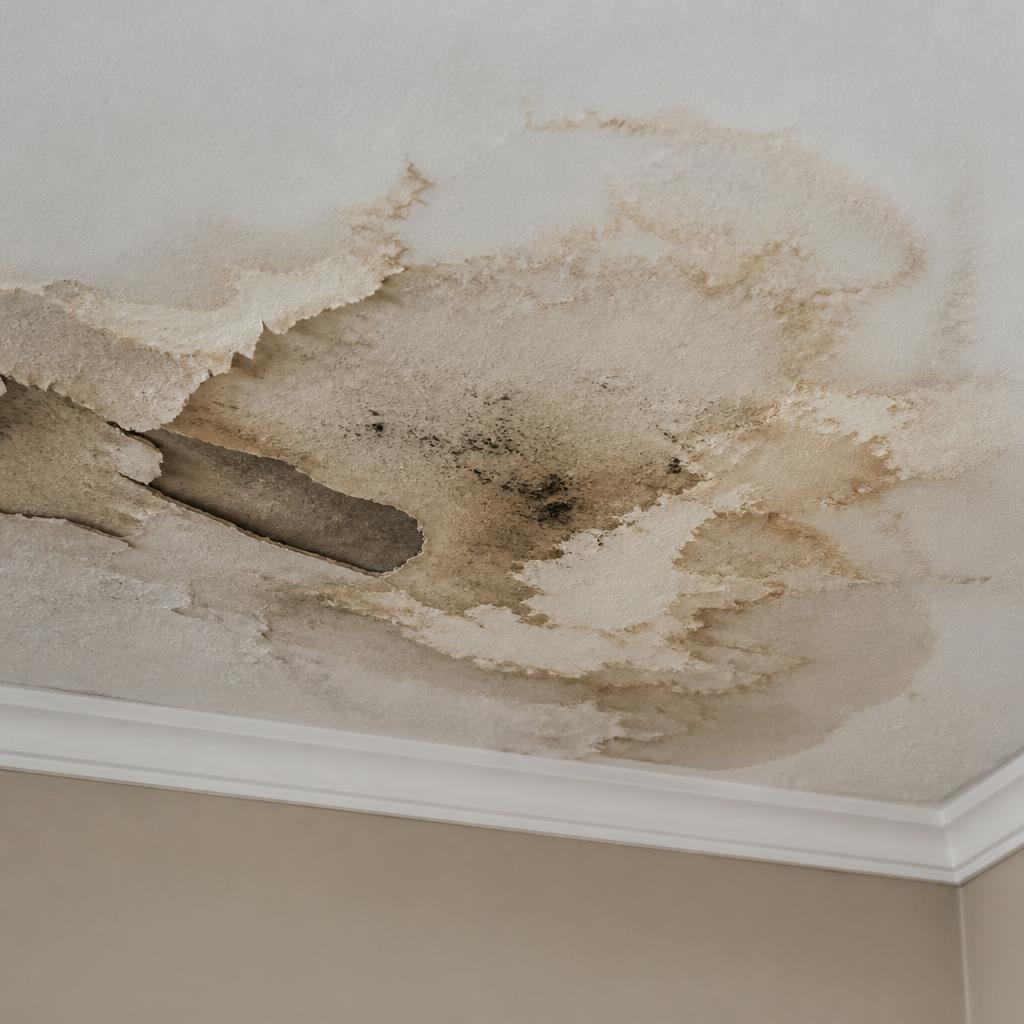
- →You have roughly 24–48 hours before mold begins colonizing wet building materials.
- →Document everything with photo and video before you throw anything away.
- →Wet drywall must be cut out to at least 12 inches above the water line.
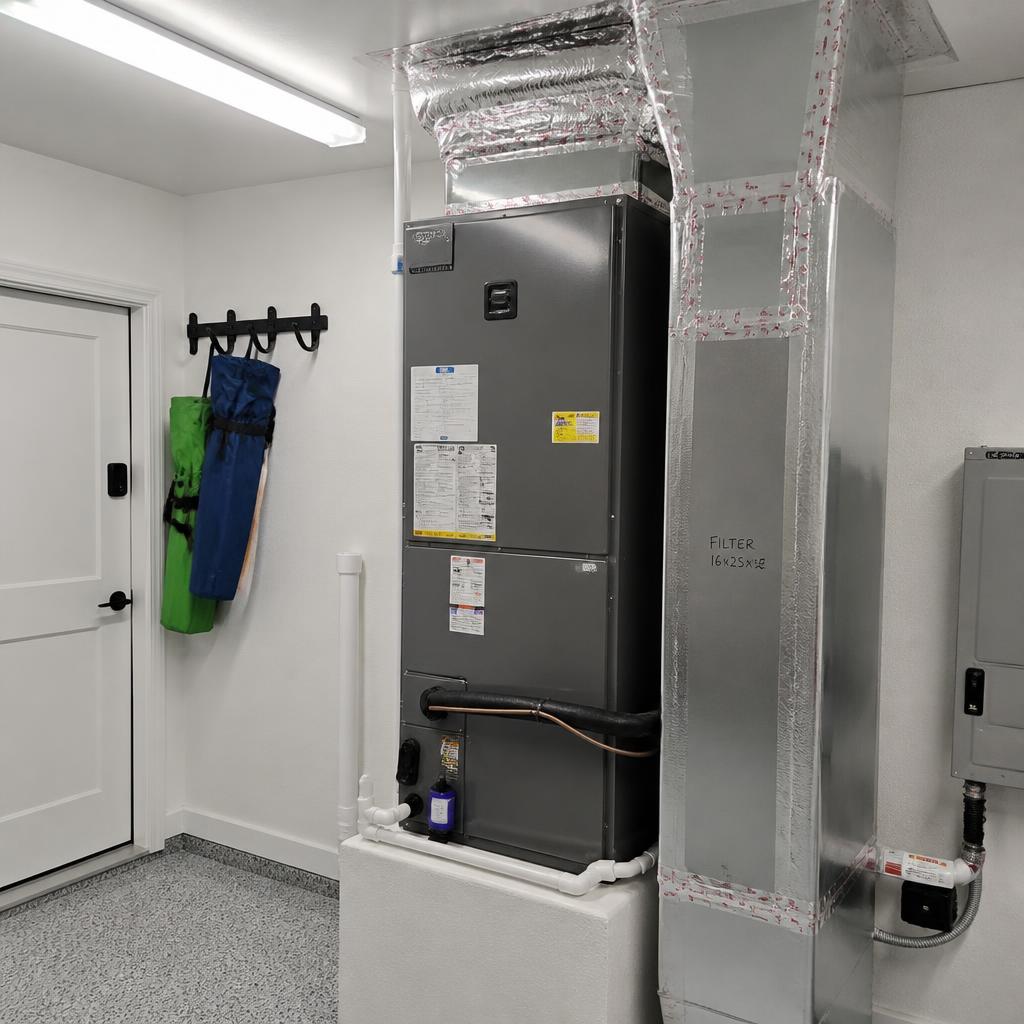
- →Do not run the AC through a wet return chase — it spreads spores through the whole house.
Hour 0–24: safety and documentation
- Confirm the structure is safe to enter — no active electrical hazards, no gas smell, no structural damage.
- Turn off the AC if the return-air chase or attic is wet. Running it now spreads spores everywhere.
- Photograph and video EVERY room and every wet item before you move anything. This is the single most important step for your insurance claim.
- Remove standing water with a wet-vac or pump; open windows only if humidity outside is lower than inside.
- Get contents (rugs, furniture, boxes) up off wet floors immediately.
Hour 24–72: dry out and demo
- Rent or buy commercial-grade dehumidifiers (residential units aren't enough after a flood).
- Set up axial fans to move air across wet surfaces — but only after dehumidifiers are running.
- Remove wet insulation immediately — it holds water like a sponge and will grow mold within 48 hours.
- Cut out wet drywall to at least 12 inches above the visible water line. Bag and remove.
- Pull baseboards and drill weep holes in cavity bottoms so wall studs can dry.
Week 1–2: inspect and rebuild
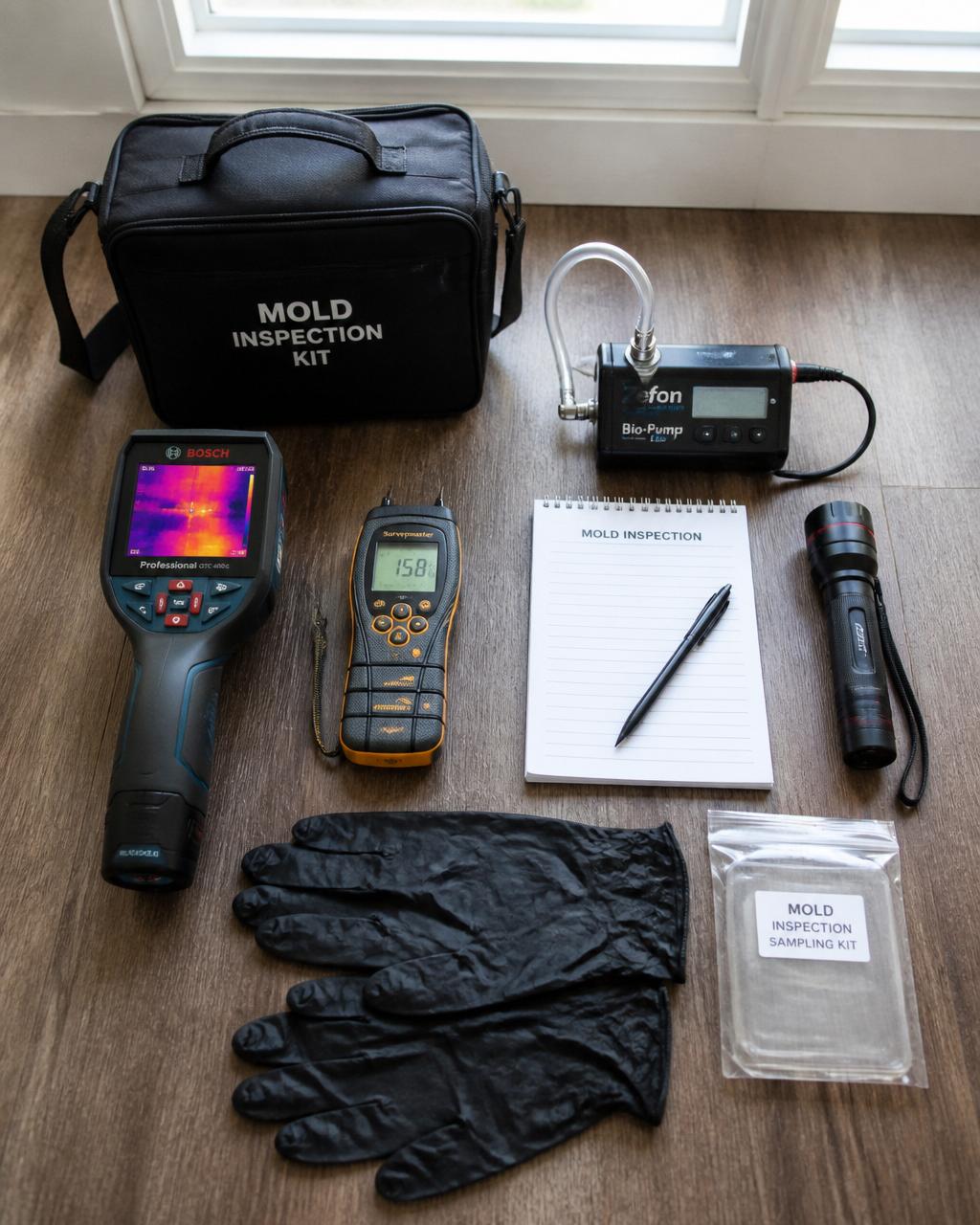
- Get moisture-content readings on framing before you close walls. Wood should be below 16%, drywall below 1%.
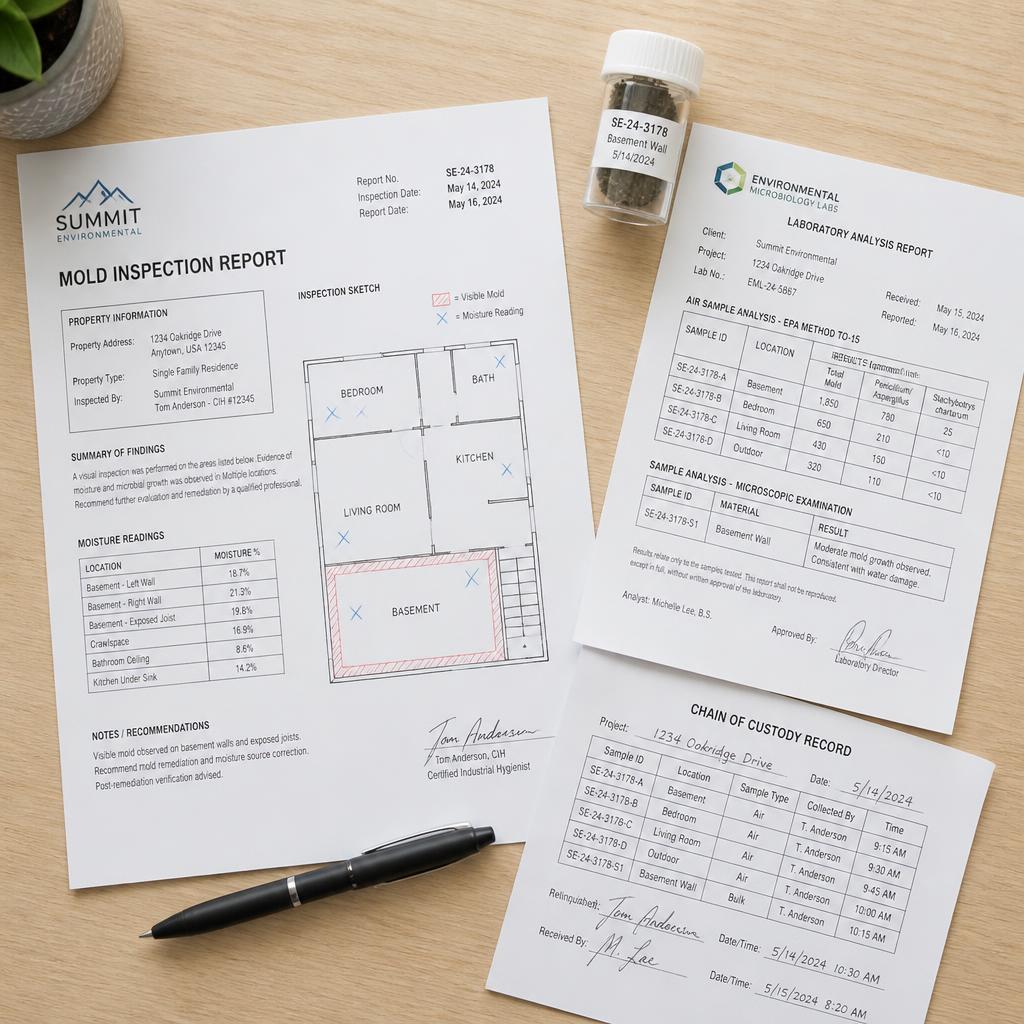
- Book an independent mold inspection with air sampling before drywall goes back up.
- If sampling shows elevated Aspergillus/Penicillium or water-damage species like Chaetomium or Stachybotrys, remediate before finishing.
- Do post-remediation verification (clearance testing) after the crew is out.
- Only then rebuild.
A note on insurance
In Florida, most homeowners' policies cover 'sudden and accidental' water damage from a named storm, but mold coverage is often capped ($10,000 is common) and requires documentation. Your best leverage is early photos, moisture logs, and a third-party inspection report — all things a professional mold inspector produces as a matter of course.
"The homeowners who come out ahead after a hurricane aren't the ones who work fastest — they're the ones who document first, dry second, and rebuild last."
How soon can mold grow after a hurricane?+
In Florida's climate, mold can begin colonizing wet drywall, insulation and framing within 24 hours, and be visible within 48–72 hours.
Do I need a mold inspection if the water was clean?+
Yes. 'Clean' water becomes contaminated within hours, and even category-1 water intrusion into wall cavities produces the moisture conditions mold needs. Inspection before rebuilding is the standard of care.
Book a Central Florida mold inspection.
Inspections start at $250 with moisture mapping, thermal imaging and — when needed — lab-analyzed air samples.