- →A proper inspection takes 60–120 minutes for a single-family Florida home.
- →It should include visual, moisture, thermal and (when warranted) air or surface sampling.
- →You'll receive a written report with photos, moisture readings and lab data.
- →The inspector should NOT also be the remediator — that's a conflict of interest.
If you've never had a mold inspection done, the process can feel a little mysterious. This is what a professional Central Florida inspection actually looks like — from the phone call to the final report.
Before we arrive
Good preparation gets a better inspection. On the phone we'll ask about symptoms, visible growth, recent leaks or storms, and any prior remediation. On the day of, we ask you to:
- Close all windows and exterior doors at least an hour before the appointment.
- Keep HVAC on its normal setting — we want real-world conditions.
- Skip any strong cleaning products the day before (they can skew air samples).
- Move fragile items away from walls in areas of concern.
On-site: what happens
A standard inspection follows a repeatable protocol:
- Client interview — walk through your concerns and history.
- Exterior review — roof lines, stucco, grading, AC condensate, window seals.
- Interior visual — every room, every wet area, HVAC, attic access if safe.
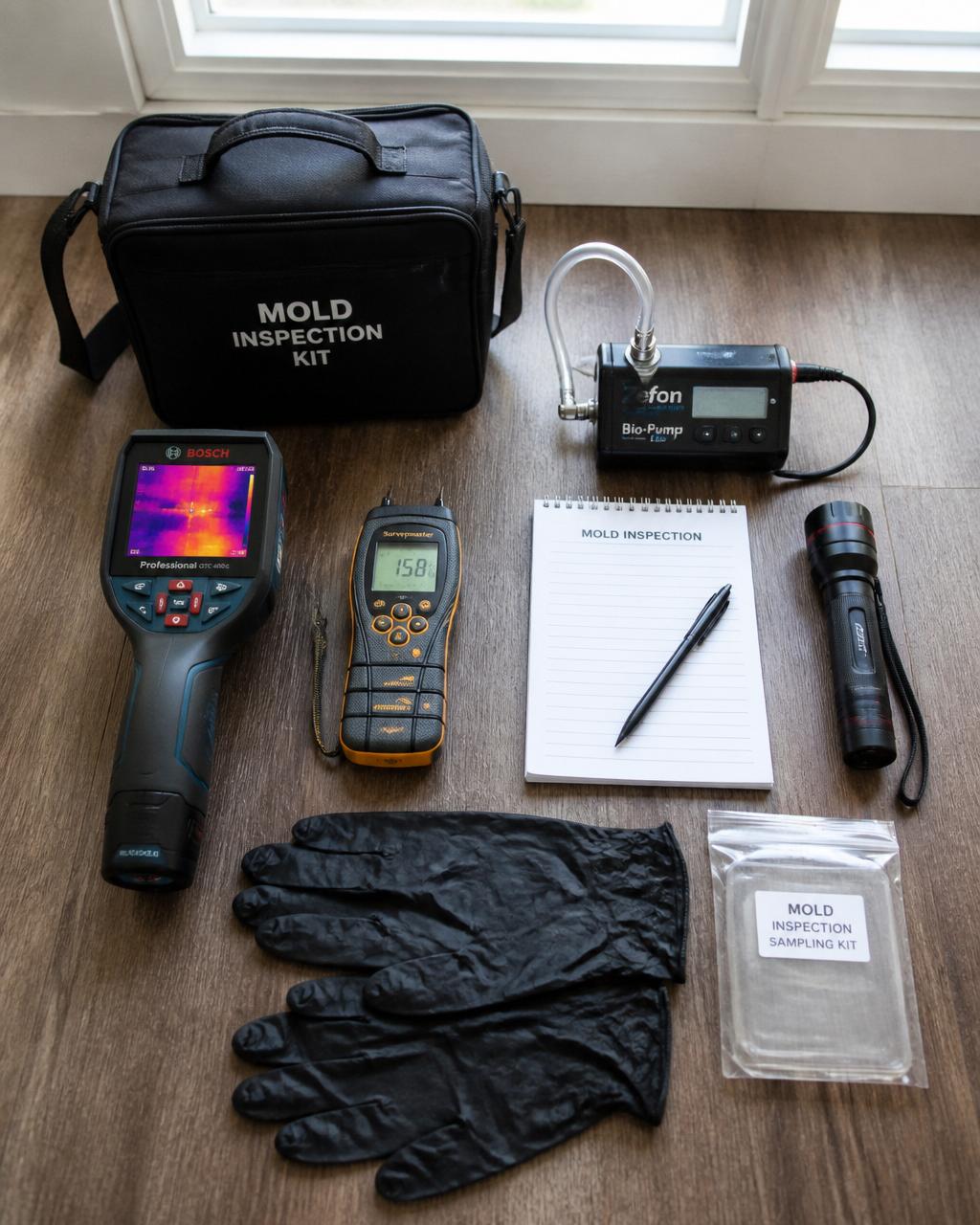
- Moisture mapping — pin and pinless moisture meters on suspect areas.
- Thermal imaging — infrared scan of walls and ceilings to spot cold/wet zones.
- Sampling decision — based on what we found, we recommend (or skip) lab samples.
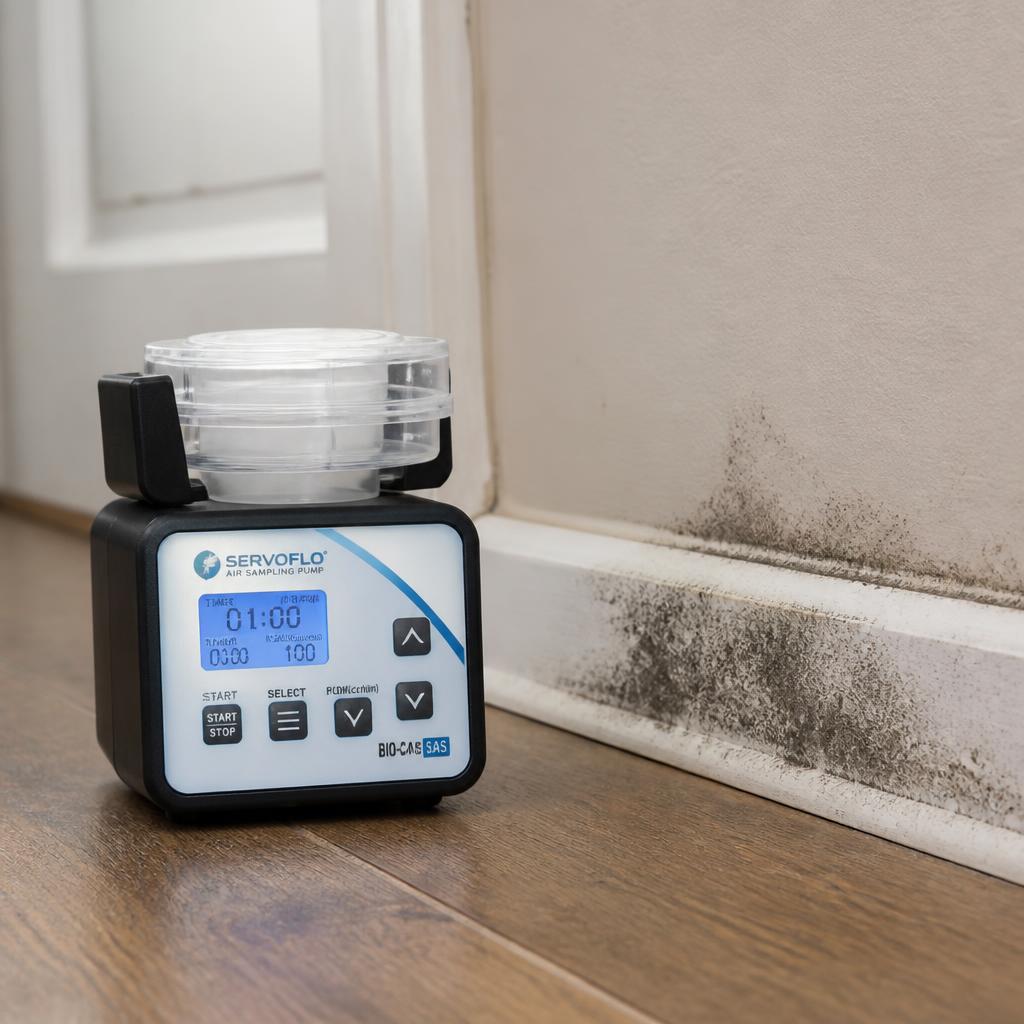
When samples are taken
Not every inspection needs lab work. We take samples when the finding is ambiguous, when medical documentation is needed, or when a real-estate transaction requires clearance.
- Air samples — measure airborne spore concentration; always paired with an outdoor control.
- Surface samples — swab or tape lift on visible growth to confirm species.
- Post-remediation verification — done after the crew is gone to prove the space is clean.
Your report and next steps
You'll get a written report within 2–5 business days that includes photographs, moisture readings, thermal images, lab results with an interpretation, and a plain-English scope of work if remediation is needed. The report should tell you what to do, not just what was found.
"The best question you can ask an inspector: 'Do you also do the remediation?' If the answer is yes, get a second opinion."
How long does a mold inspection take?+
For a typical 3-bed, 2-bath Florida home, plan on 60–90 minutes on-site. Larger homes or complex issues can take 2+ hours.
Do I need to be home?+
It's strongly recommended for the first inspection. Your knowledge of the house — recent leaks, weird smells, symptoms — is a critical data source.
How much does it cost?+
Standard visual inspections in Central Florida start at $250. Lab samples run about $75–$125 each.
Book a Central Florida mold inspection.
Inspections start at $250 with moisture mapping, thermal imaging and — when needed — lab-analyzed air samples.